
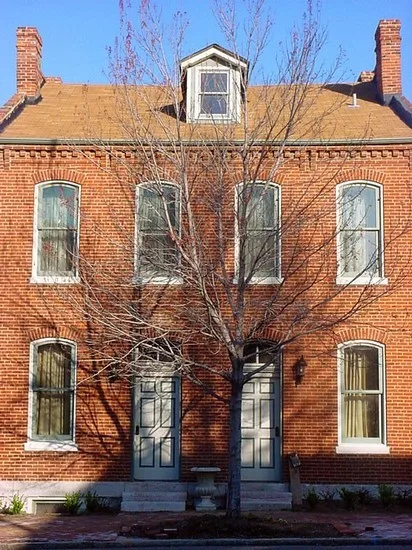
Soulard is one of the oldest neighborhoods in St. Louis. It is named for Antoine Soulard, the Spanish surveyor who held land here in the 1790s. The streets are brick. The houses are row houses and two-stories with iron fences and alley lots.
Soulard Farmers Market has been a public market since 1779. The current market hall dates to 1929. Saturday is produce, flowers, meat, and a crowd. Wednesday is quieter. People who live here use both.
Mardi Gras is the other calendar. A group called the Mardi Gras Association paraded in St. Louis as early as 1857. The modern Soulard version started in February 1980, when Hillary Clements and friends threw a party at 1017 Russell, now the Hi-Hat, to chase off winter. The party spilled into the bars and became an annual season. Explore St. Louis calls it the second-largest Mardi Gras celebration in the country. The Grand Parade is the main event. There used to be a Fat Tuesday parade too. In 1999 that parade broke into a riot, and the Fat Tuesday parade did not come back.
Anheuser-Busch sits at the south edge. 1860 Saloon and the pub corners give the neighborhood a night that lasts later than the market. Benton Park sits west. Lafayette Square grew around Lafayette Park, opened in 1836.
Parts of Soulard sit close enough to the river that flood insurance comes up on a serious buy. Check the parcel. Two houses on the same walk can sit in different conversations.
Why people stay
- The market is a weekly errand.
- The brick streets date to a 19th-century river neighborhood.
- Mardi Gras is a party you can live inside or a few streets off.
- Benton Park and Lafayette Square are close if you want a related block.
- You can walk to dinner on a Tuesday.
Homes here
Soulard homes for sale are old brick. Parking, masonry, and the flood map belong to the address. Homes for sale Benton Park St. Louis and Lafayette Square homes for sale are related fabric with a different weekend. A St. Louis realtor will walk the street at the hour you would come home. See the city neighborhood guide.